
Health systems are being asked to modernize access, improve consumer experience, adopt AI, and create measurable operating value at the same time. Many have the technology, vendors, and strategic ambition, but not enough senior digital leadership to connect those pieces, set priorities, and move the work into execution.
That is where a chief digital officer in healthcare comes in. The role gives an organization clear executive ownership across digital strategy, consumer experience, technology-enabled transformation, and the operating decisions required to make those efforts useful. Many health systems are hiring this role full time, and for good reason. The role matters regardless of how it is filled.
The market is clearly moving toward more formal digital leadership in healthcare. Chief digital officer, chief digital health officer, and chief digital and information officer roles are now established across health systems and healthcare companies. Chief digital officer postings in healthcare rose roughly 35% year over year in early 2026, the fastest-growing VP+ executive role in the sector, according to executive hiring intelligence firm ExecSignals. The broader trend is visible: digital, AI, consumer experience, and operating model decisions increasingly require executive ownership.
What a chief digital officer actually does
A CDO is not simply a technology consultant with a senior title. The role sits at the intersection of strategy, operations, digital experience, technology, and organizational change.
The right leader helps connect the board or executive team’s ambition to the work happening across IT, clinical operations, finance, marketing, access, and service lines. That may include setting the digital strategy, prioritizing investments, selecting vendors, defining governance, and making sure the organization can measure whether an initiative is creating value.
The exact mandate depends on the organization. Common areas of responsibility include:
Digital strategy and roadmap development. Translating enterprise priorities into a sequenced plan across patient access, digital front door, data, AI, virtual care, and operational workflows.
Executive decision support. Giving the CEO, board, and leadership team a clear view of where to invest, what to stop, and which dependencies need to be resolved before a major initiative moves forward.
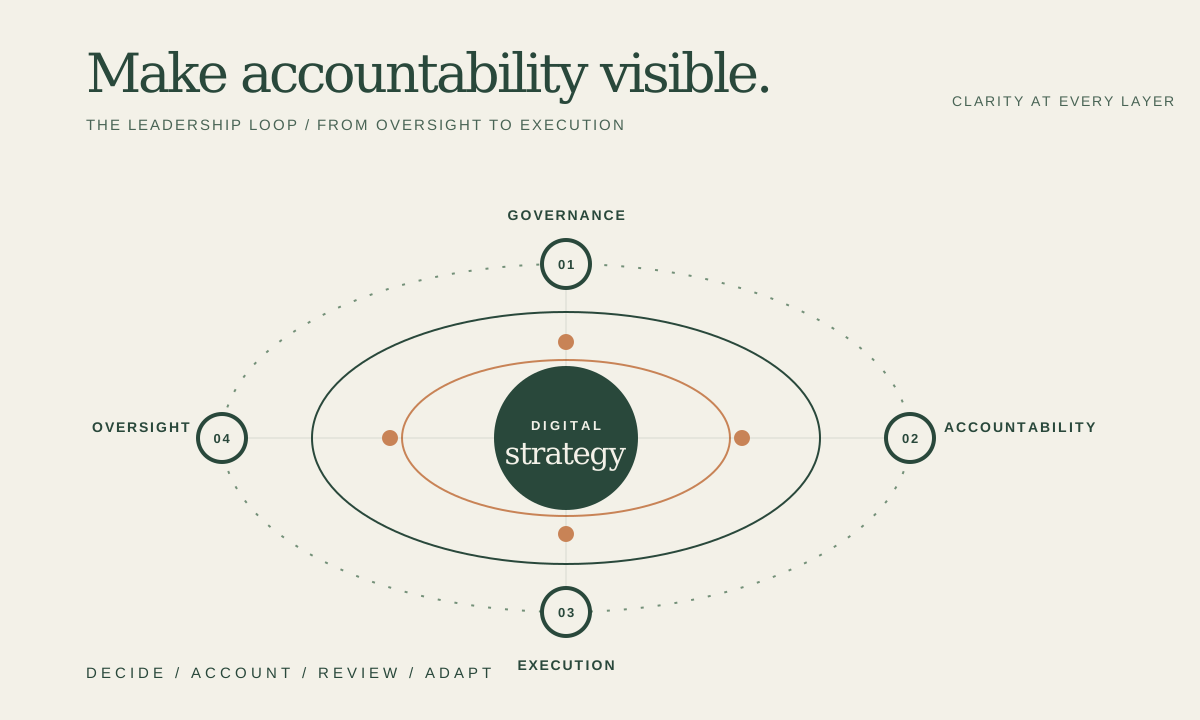
Governance and operating model design. Defining ownership, decision rights, funding processes, risk review, and cross-functional accountability for digital and AI programs.
Transformation execution. Helping move a priority initiative from strategy to implementation, including vendor evaluation, business case development, change management, and performance measurement.
Consumer and patient experience. Improving how people find, choose, access, and stay connected to care across digital and physical channels.
This work is different from owning day-to-day infrastructure, cybersecurity, or core IT operations. A CDO should complement the CIO, CTO, CISO, chief strategy officer, chief operating officer, and clinical leadership, not create another disconnected layer.
The American Hospital Association’s Building and Implementing an Artificial Intelligence Action Plan for Health Care makes a similar point. Responsible AI adoption requires the right people, processes, and technology, with a chief-level leader connecting pilots and projects to the organization’s strategic objectives. The need is not more isolated experimentation. It is disciplined prioritization and execution.
The problem is usually not a lack of ideas
Most healthcare organizations do not need another list of possible digital initiatives. They already have more ideas than they can fund, staff, govern, or implement.
The harder questions are commercial and operational:
- Which initiatives matter most to access, quality, experience, margin, or workforce capacity?
- Which programs are ready to scale?
- Who owns the outcome?
- What data, workflow, and adoption barriers will determine success?
- How will the organization know whether the investment is working?
Across BreckenReese Ventures, our partners hear this same conversation when they work with peers at health systems. It always comes back to the patient waiting for an answer, the clinician who needs more time at the bedside, and the family hoping for good news. When the organization builds around their real experience, their time, their trust, and their peace of mind, the technology decisions get easier.
This is why the right answer is often a chief digital officer, not another broad strategy engagement. The leader is involved in the decisions, tradeoffs, and operating conversations that determine whether the strategy survives contact with the organization.
When fractional leadership makes sense
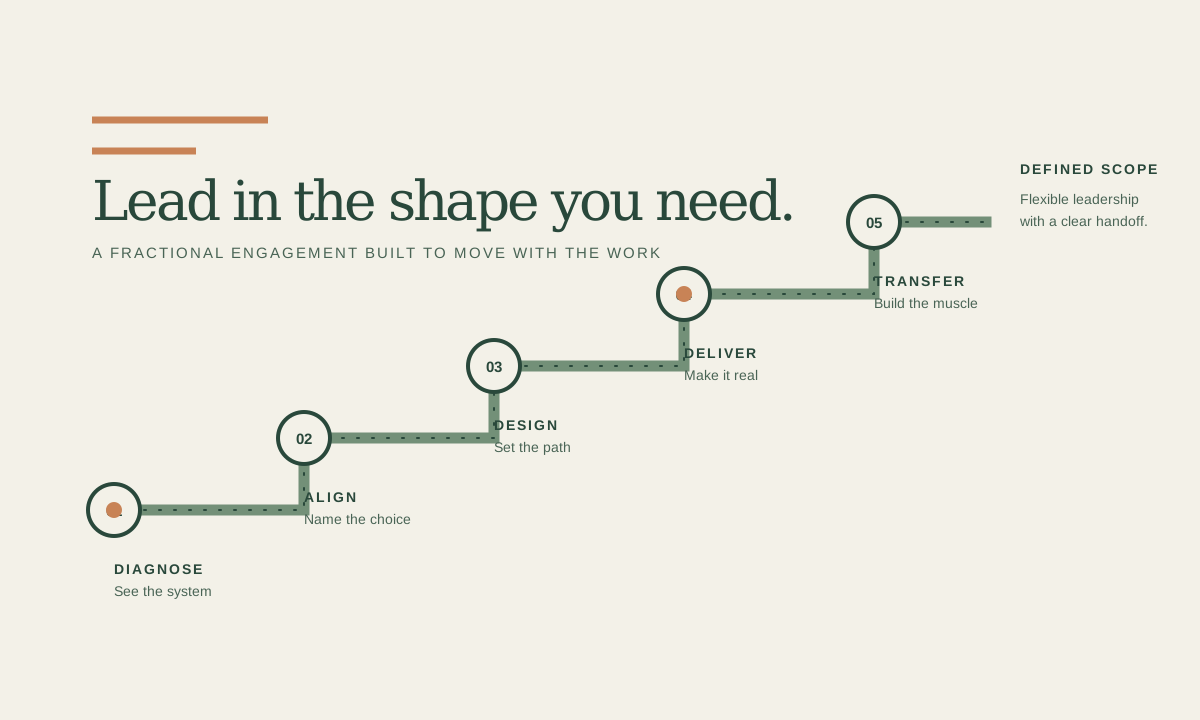
A fractional CDO is often appropriate when the need for senior leadership is real, but the long-term shape of the role is not yet clear.
That may be the case when a health system is defining its enterprise digital strategy, preparing for an AI program, redesigning patient access, integrating an acquisition, or trying to move several pilots into broader deployment. It may also apply to a healthcare technology company that needs an operator’s perspective on product strategy, provider workflows, commercial positioning, or enterprise growth.
Fractional leadership makes particular sense in four situations.
1. The organization has a defined priority but not enough executive capacity
A CEO or COO may know that access, digital experience, AI governance, or transformation must move forward. The internal team may be capable, but fully committed to running the existing business.
A fractional CDO can provide the additional senior capacity needed to frame the work, organize the team, establish decisions, and keep the initiative moving. This is especially useful when the work cuts across functions and no single existing leader has the time or mandate to own it.
2. The organization is between leaders
A full-time search can take months, and the business does not stop while the search is underway. A fractional executive can provide continuity during an interim period, maintain momentum, and help clarify the profile of the permanent hire.
This also creates a practical opportunity to separate the work that needs a permanent owner from the work that needs an experienced operator for a defined period. In many cases the organization still proceeds to a permanent hire, and the interim period sharpens the profile of who that should be.
3. The organization needs to test the shape of the role
Some organizations need digital leadership, but are not yet sure whether the long-term role should be a CDO, chief transformation officer, chief consumer officer, or a broader digital and technology position.
A fractional model allows the organization to understand the mandate before committing to a permanent structure. The engagement can surface the required capabilities, reporting line, decision rights, and relationship to IT, clinical operations, strategy, and marketing.
4. The work is important, but time-bound
A digital roadmap, AI readiness assessment, governance model, vendor selection process, or patient access redesign may have a clear beginning and end. It still requires executive judgment. Once the foundation is built, the organization may decide the work is done, or it may decide the role now deserves a permanent owner. Both are legitimate outcomes.
The goal of a fractional engagement is not to substitute for a permanent leader where one is needed. It is to build the right capability, resolve the priority decisions, and leave the organization more prepared to hire or scale with confidence.
When a full-time hire is the better choice
Many organizations are hiring full-time CDOs, and in most cases that is the right call. A full-time CDO is the better choice when digital transformation is a permanent enterprise responsibility with a large internal team, sustained capital allocation, and ongoing operational accountability.
A full-time leader may be necessary when the organization needs continuous ownership across multiple business units, has significant technology or platform modernization underway, or expects digital capabilities to become a core part of its operating model and competitive position.
The question is not whether full-time or fractional leadership is inherently better. The question is what the organization needs the leader to own.
Consider a full-time hire when:
- The mandate is broad and ongoing, not tied to a defined priority.
- The role will manage a substantial permanent team.
- Digital decisions are central to the organization’s long-term competitive strategy.
- The leader needs continuous authority over budgets, platforms, and operating performance.
- The organization has enough clarity to define the permanent role with confidence.
Consider fractional leadership when:
- The organization needs senior judgment now.
- The priority is clear, but the long-term structure is not.
- A major initiative is stalled between strategy and execution.
- Internal leaders need capacity, coordination, or an outside operating perspective.
- The organization wants to establish a roadmap, governance model, or business case before making a permanent hire.
Shape the engagement around the decision
The strongest fractional CDO engagements are not fixed packages. They are built around a small number of decisions and deliverables that matter to the business.
A practical engagement might begin with an executive working session to clarify the problem, the desired outcome, the existing constraints, and the decisions that cannot wait. From there, the work may take one of several forms:
- A focused digital and AI readiness assessment.
- A 90-day transformation roadmap.
- A patient access or digital front door strategy.
- An enterprise AI governance and use-case prioritization model.
- A vendor and platform evaluation.
- An interim executive mandate during a leadership transition.
- Ongoing counsel to the CEO, board, or executive team.
The time commitment should follow the work. Some situations require an embedded leader in the room each week. Others need a senior advisor for key decisions, structured working sessions, and accountability between milestones.
The important point is to define the operating relationship at the beginning. Who does the leader report to? What decisions can they make? Which internal leaders must be involved? What will be delivered in the first 30, 60, and 90 days? How will progress be measured?
What good looks like after 90 days
A fractional CDO should create clarity early. The first 90 days should not be consumed by broad discovery without decisions.
By the end of that period, leadership should have a more precise view of the current state, the most important opportunities, the constraints that could derail them, and the sequence of work required next. The organization should also understand who owns each priority and how progress will be measured.
Depending on the mandate, the initial outputs may include:
- A prioritized digital transformation roadmap.
- An agreed set of enterprise outcomes and KPIs.
- A defined AI use-case intake and review process.
- A patient or consumer journey diagnosis.
- A technology and vendor decision framework.
- An operating model for digital leadership and governance.
- A short list of initiatives ready for business case development or implementation.
This is the difference between healthcare digital transformation consulting that produces recommendations and executive-level support that helps the organization act on them. The strategy should be clear enough to guide investment and practical enough to shape work next week.
The BreckenReese Ventures advisory approach is built around embedded leadership, ongoing counsel, and defined strategic projects. The form changes based on the problem. The standard is the same: create focus, make the necessary decisions, and move the work forward.
Sources: ExecSignals, Healthcare Executive Hiring 2026: VP+ Demand (April 2026); American Hospital Association, Building and Implementing an Artificial Intelligence Action Plan for Health Care.
The decision to make this quarter
If digital transformation is a stated priority but no one has clear accountability for moving it forward, that is a leadership problem, not only a technology problem.
This quarter, decide whether your organization needs to hire a permanent digital executive, bring in fractional senior capacity, or clarify the mandate before doing either. Do not let an ambiguous leadership structure become an excuse for another round of disconnected pilots.
A useful question for the CEO and executive team is: What decision would move our most important digital priority forward in the next 90 days, and who has the authority and capacity to make it?
If the answer is unclear, outside executive support may be warranted.
Where to start
Begin with the real problem, not the title. Identify the priority that is creating the greatest strategic or operational drag, then define the decisions, stakeholders, and outcomes required to move it.
A chief digital officer can provide the executive bridge between ambition and execution, and for many organizations a full-time hire is the right answer. Fractional leadership is one practical way to bring that senior capacity into the organization now, while the work is shaped, the operating model is clarified, and the decision about a permanent role becomes easier to make well.
BreckenReese Ventures provides operator-led healthcare technology advisory services, digital transformation strategy, AI readiness, governance design, and consumer experience support. If your organization is deciding what needs to move next, share where you are headed.